UHI vs Generac vs Allmand Light Towers: Which One Suits Your Site?
This light tower comparison breaks down UHI, Generac, and Allmand models so you can quickly work out which one suits your site. If you’ve started shopping for a mobile light tower, you’ve probably noticed the market splits into two very different price brackets. On one side you’ve got affordable, compact units built for general construction, farm work, and roadworks. On the other, you’ve got heavy industrial towers built for mine sites and 24-hour oil and gas operations, priced and built accordingly.
UHI, Generac, and Allmand all make light towers, but they’re not really competing for the same buyer. Here’s how they actually stack up, and how to work out which category you need before you start comparing individual models.
The short version
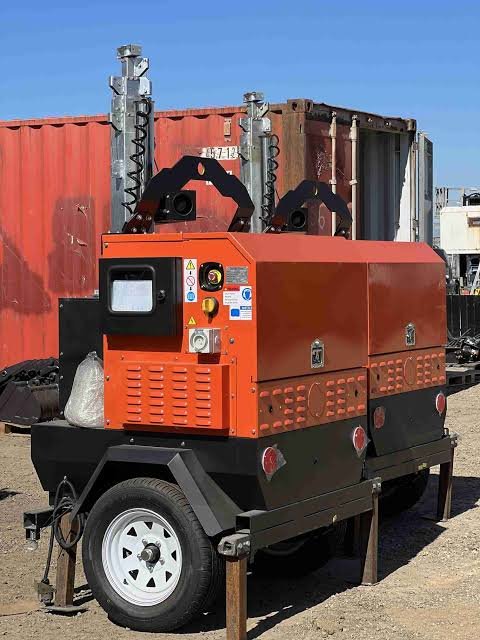
UHI’s light towers (available here on Machinery Classifieds) are compact, lighter-duty units aimed at construction sites, roadworks, farms, and small events — solid lighting at a price that doesn’t require a mining budget. Generac sits in the middle: well-built, widely supported diesel and battery towers aimed at general contractors and rental fleets. Allmand’s Maxi-Lite range is built for the top end — heavy industrial mast towers designed for mine sites, oil and gas operations, and long-haul 24/7 use, with a price and weight to match.
If you’re lighting up a residential build, a farm shed, or a short-term civil job, you’re shopping in UHI/Generac territory. If you’re lighting a mine site or running lights non-stop for months at a time, you’re in Allmand territory.
UHI Light Towers
UHI’s range includes two main types: diesel-electric (the I9T) and solar (the 4EVS600).
The I9T runs on a Kubota engine, extends to a 9 metre hydraulic mast with 359-degree rotation, and uses four LED lights for a strong, even spread of light. It’s designed to be towed in on a compact trailer and set up quickly on a roadworks site, construction job, or farm.
The 4EVS600 is the solar alternative — four 405W solar panels powering four 150W LED lights (19,500 lumens each) on a 7.5 metre mast. No fuel, no engine noise, and no running costs beyond the initial purchase. The tradeoff is that performance depends on the unit getting a reasonable amount of sun each day, so it suits sites with predictable daylight more than it suits deep mine pits or heavily shaded areas.
Where UHI fits: short-to-medium term construction jobs, farm and rural use, roadworks, small event lighting, and any buyer who wants a capable light tower without paying industrial-mine-spec pricing.
Generac Light Towers
Generac’s mobile light tower range (MLT and Maxi-Lite competitor lines) is a step up in both build quality and price, and it’s a brand you’ll see heavily in rental fleets across Australia and the US.
The diesel LED models in Generac’s range put out around 188,000 total lumens from four 320W LED fixtures, cover roughly 1,840 square metres of site at usable brightness, and are built with features aimed at fleet use — auxiliary power outlets for running tools or electronics off the same generator, a 359-degree rotating mast, and long service intervals (750-1000 hours between services depending on engine).
Generac also offers a battery-powered tower (the MLTB) running on a 17kWh lithium battery for around 75 hours per charge, which is worth knowing about if noise restrictions or emissions are a factor on your site — inner-city builds, hospital precincts, or night work near residential areas, for example.
Where Generac fits: contractors who want a well-supported, mid-to-large general-purpose tower, particularly if you value the option of auxiliary power output or a quieter battery alternative.
Allmand Light Towers
Allmand’s Maxi-Lite is a genuinely different class of machine. The mast extends to around 8-9 metres but the unit itself is built heavier and tougher than the UHI or Generac general-purpose towers — designed for mining, oil and gas, and heavy civil sites where the tower might run continuously for months without a break.
Light output on the bigger Maxi-Lite configurations using metal halide fixtures can reach into the hundreds of thousands of lumens (some six-light mine-spec configurations are rated up to 600,000 lumens), though the more common LED configurations sit in the 200,000-230,000 lumen range. The trailer and mast assembly alone weighs in at over 1,500kg, with a GVWR around 2,270kg — substantially heavier than a UHI or general-purpose Generac unit, which reflects the reinforced six-section tower and outrigger system built for harsh, unstable ground.
Where Allmand fits: mine sites, oil and gas operations, and large-scale infrastructure projects running lighting continuously for extended periods, where ruggedness and total light output matter more than upfront cost or transport weight.
Light Tower Comparison at a Glance
| UHI (I9T / 4EVS600) | Generac (MLT range) | Allmand (Maxi-Lite) | |
|---|---|---|---|
| Mast height | 7.5-9m | ~7-9m | ~8-9m |
| Power source | Diesel (Kubota) or solar | Diesel or battery | Diesel (metal halide or LED) |
| Typical lumens | ~19,500 per light (I9T: 4 lights) | ~188,000 total (LED) | ~230,000 (LED) up to 600,000 (mine-spec MH) |
| Built for | Construction, farm, roadworks, small events | General contracting, rental fleets | Mining, oil & gas, continuous heavy-duty use |
| Approx. weight class | Light, easily towed | Mid-weight | Heavy (1,500kg+ trailer/mast alone) |
FAQ
How many lumens do I need for a construction site? For most general construction and roadworks applications, 75,000-150,000 total lumens across a tower is enough to light a typical working area safely. Larger or open sites, or sites requiring higher safety/visibility standards (major civil works, night earthworks), often look at 180,000+ lumens. Mine sites and large industrial yards are where you start seeing towers rated in the 300,000-600,000 lumen range, mostly because the area being lit is so much larger, not because the work itself needs that much brightness.
Solar or diesel light tower — which suits Australian conditions? Solar towers like the UHI 4EVS600 work well on sites with reliable daylight hours and where you want to avoid refuelling, noise, and emissions — rural properties, farms, and daytime-exposed construction sites are good candidates. Diesel remains the safer choice for sites with inconsistent weather, heavy shade, or where the tower needs to run reliably overnight regardless of how much sun it got during the day. If you’re in regional Queensland with consistent sun, solar is genuinely viable; if you’re working in a deep excavation or under cover, stick with diesel.
Do I need a mine-spec tower like the Allmand Maxi-Lite for a regular construction job? Almost certainly not. Mine-spec towers are built for conditions and duty cycles most construction and farm sites never encounter — continuous running for months, rough unprepared ground, and exposure to dust and vibration well beyond a typical job site. For most buyers, a UHI or Generac unit will do the job for a fraction of the purchase price and towing weight.
Ready to see what’s available? Browse our current light tower listings, and if you’re new to buying second-hand gear, read our guide on avoiding a lemon before you commit.






Comments
1
[…] compare machines side by side, or if you’re weighing up equipment like light towers, see our light tower comparison for a detailed breakdown of what to look for before you […]